Keeping the Clutter At Bay: The Not So Magical Art of Knowing Thyself
Today, we're beginning my wrap-up of the Catholic Home series with a little tough love. Because someone out there— maybe you, maybe not you—needs it.
My friend Jess is not one of those people. She has five small children under the age of nine, and lives in a 1,000 square foot home with no basement, no attic, very few closets (and a very nice husband who is a little clutter prone). She does a fantastic job of keeping her family’s possessions to a minimum. But clutter still builds up. There are simply too many people (including that very nice husband) in too small of a space. No amount of decluttering will change that.
If, like her, you are living with a passel of children in a truly tiny home, with a spouse who doesn't share your hatred of clutter, you should probably stop reading this blog right now and friend her on Facebook so you can commiserate. Your lot in life is hard, and today’s blog will probably just annoy you.
If, however, you are like most of America and simply have too much damned stuff, read on.
Some stuff, of course, isn’t damned. Some stuff is necessary. Some stuff is beautiful. Some stuff brings joy, beauty, and light to our lives, reminding us of God, our family, our friends, and days past.

It’s not stuff in general that’s damned. It’s too much stuff. Too much stuff is always too much damned stuff.
Why?
The Unbearable Heaviness of Clutter
Because, too much stuff makes life hard. It makes it harder to clean your home. It makes it harder to organize your home. It makes it harder to enjoy your home. And it makes it harder for others to enjoy your home as well.
Too much stuff also makes it harder to appreciate the beauty of what you possess. It makes it harder to relax. It makes it harder for small children to roam about without hurting themselves. It makes it harder to practice hospitality. It makes it harder to practice detachment.
And too much stuff makes it harder to know what you actually need and to budget accordingly. It makes it harder to stay in a home with a mortgage you can afford. It makes it harder to sell your home. It makes it harder to move from your home. It makes it harder to do just about everything to, with, and, in your home other than resent it.
In fact, too much damned stuff makes everything we’ve talked about in the Catholic Home series thus far—keeping a house well-maintained, personal, and full of both beauty and helpful sacramentals—hard.
If you really want a home that physically reflects the faith you proclaim, you’ve got to deal with the stuff, the excess, the clutter, the detritus of life that builds up in your closets, basements, attics, garages, and kitchen utility drawers. Figure out this piece, and the rest gets exponentially easier.
So, what can you do about it?
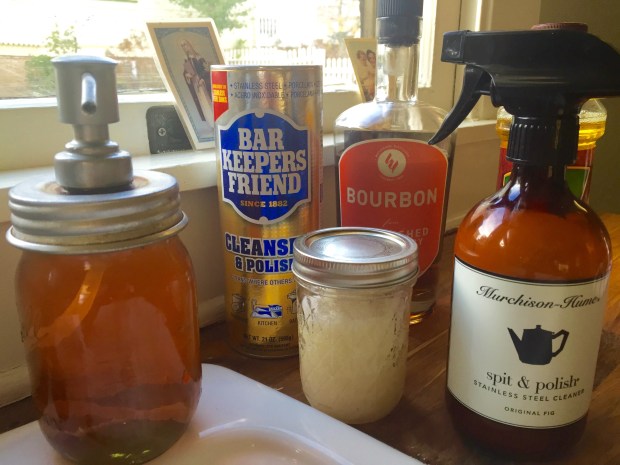
Well, you can buy bestselling books on the topic. You can hire a professional organizer. You can come back here after the New Year, when I go into greater detail about how I keep the clutter at bay in my home. But none of that will help you over the long run if you don’t first deal with the real issue at hand: why you have so much damned stuff to begin with.
Decluttering your home is one thing. Keeping it decluttered is another. And you can’t do the latter unless you know why it got overrun with books, toys, sweatshirts, bikes, boxes, rubber bands, and outdated appliance manuals in the first place.
The Why Behind the Stuff
For some of us, the answer is simple: we have too much stuff because we’re too busy, too sick, or simply too lazy to go through our homes and purge what we don’t need. We know we should sort through our linen closet, but there’s a baby crying or a deadline to meet or something really shiny on Facebook, so we put it off for another day…then another…then another, until the problem has grown so large that it would overwhelm Marie Kondo herself.
Others among us have too much stuff because buying things makes us feel better about our lives. The thrill of making a purchase consoles us, cheers us, and reassures us. It fills, however, temporarily, a hole in our hearts and makes us forget, albeit briefly, the pain of loneliness, rejection, failure, or sin.
Then, there are those of us who crave whatever is new. Possessing it means we’re cool, hip, current. We’re successful. We’re in control. We’re better than those around us. At least, that’s what we tell ourselves as we chase after the latest and the best, letting last year’s phone, television, sweater, and shoes gather dust wherever we’ve stashed them.
There also are those of us who have too much stuff because we don’t trust God to provide us with what we need. The pants that have grown too large or too small, our old kitchen table and chairs, our phones, computers, bedspreads long since replaced—we hold on to all that and more, fearing that if we get rid of it today, we’ll need it tomorrow, and we won’t have the means to obtain it again.
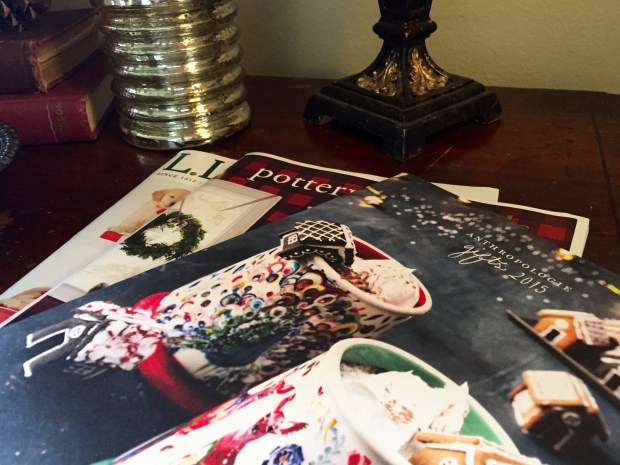
Not last and not least, there are those who really think we need a lot of stuff, who think six pairs of pajamas, 10 pairs of jeans, and 40 pairs of shoes (or five different American Girl dolls, 50 sets of Legos, 6 types of hammers, 8 specialty shampoos, 25 shades of eye shadow, three stereo systems, and the contents of the entire Williams Sonoma Christmas catalogue) are necessary. That’s what the television and magazines say after all.
I can go on.
There are people who live in the past, conflating memory and memorabilia.
There are people who feel wasteful if they throw something—even broken somethings—out.
There are people who feel ungrateful if they give away a gift.
There are people who can’t set healthy boundaries and stop their mother from giving them and their kids things they don’t want or need.
There are people who get a high from finding bargains, and can’t stop themselves from buying that bargain, no matter how unnecessary it may be.
There are people who can’t communicate effectively with their hoarding-prone, over-spending spouse, who haven't learned or haven't used the right words to convey the seriousness of the frustration such behavior causes them.
There are people who can’t say “no” to their children.
There are people who can’t say “no” to themselves.
There are people too proud to ask for help or accept help.
And there are people in probably a 100 other situations with 100 other problems. There are all sorts of reasons why our closets are overflowing and our garages are bulging. There also is no end to the excuses we can devise as to why we haven’t seen our countertops for a month and why our linen closet might qualify our family for federal disaster assistance.
But only you (maybe with the help of your spouse or close friends) can know what's really going on.
And only you can decide to do something about it.
Taking Back Control
I don’t know you. I’m not in your home. I’m not judging you. I’m just writing down some thoughts and throwing them up online for perfect strangers to read. Maybe you, Perfect Stranger, live like a Franciscan Friar of the Renewal. Maybe you are a Franciscan Friar of the Renewal. Maybe clutter isn’t a problem for you at all. Or maybe it’s a problem you truly could care less about.
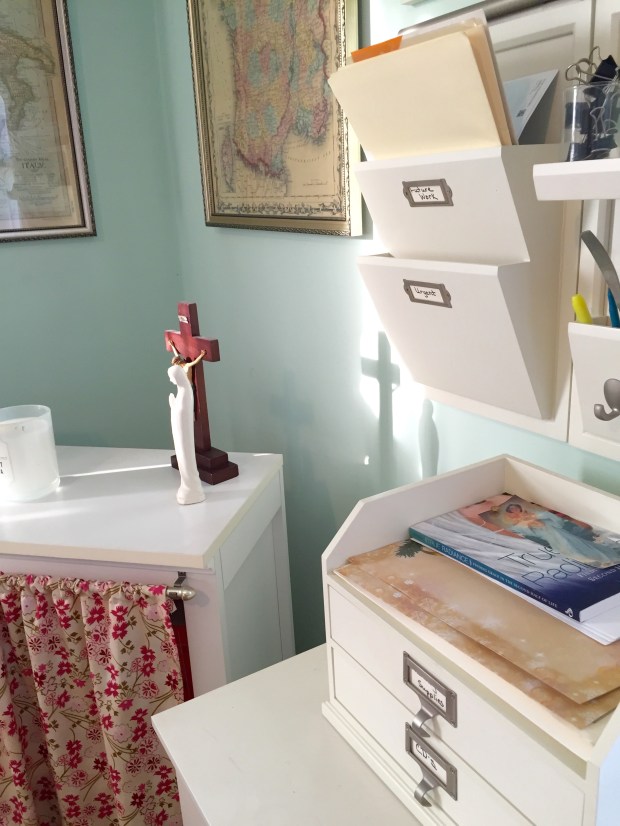
But if it is a problem and if you do care, only you can make the decision to get the babysitting or professional help you need to start purging. Only you can make the decision to get off Facebook and go clean your bathroom cupboards. Only you can start looking to God and not stuff, new or otherwise, to satisfy you. Only you can make the decision to trust Him. Only you can make the decision to find your identity in Him. Only you can reject what the culture says you need and assess what you truly need.
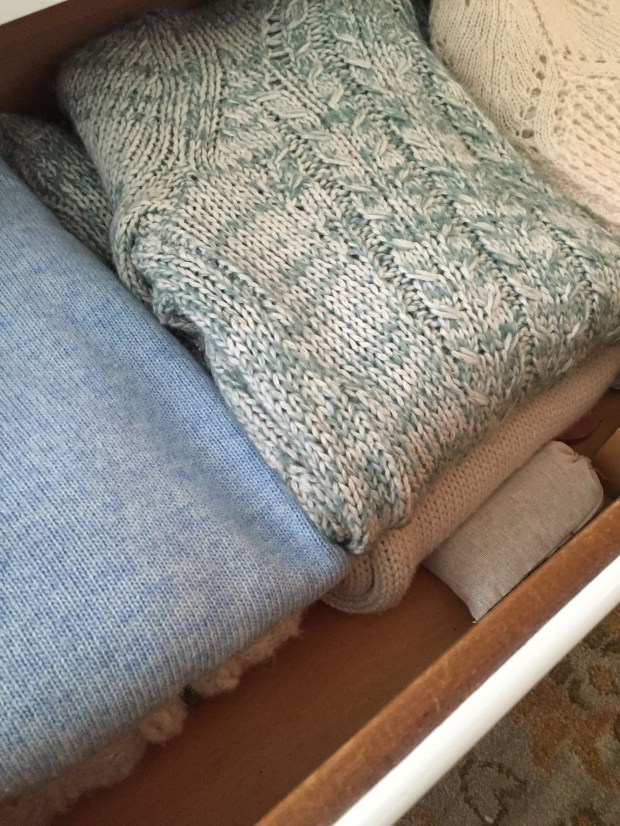
Likewise, only you can choose to live in the present, do what’s right for your family, set healthy boundaries, communicate more effectively, resist temptation, and do the work necessary to unburden yourself of all the damned stuff that is cluttering up your life, your heart, your head, and your home. Or, at least, cluttering up your dresser drawers.
That isn’t easy to do. It’s painful. It requires looking at your weaknesses, your wounds, your sins, and your failures. It means questioning your priorities. It means questioning yourself, your spouse, your parents, and maybe having difficult conversations with all the above.
The temptation, in this life, will always be to look away from all that, to blame others, get angry at others, heck, to get angry at me. It’s so much easier to just let the crap accumulate and tell yourself you like it that way or there’s nothing you can do about it.
And maybe there is nothing you can do about it. Maybe you’re caring for a dying parent. Maybe you’re a young mom, drowning in babies, and dreaming of the day when you can go to the bathroom in peace, let alone clean your garage. Maybe your spouse is an abusive hoarder and decluttering is the least of your problems. If that's the case, this might not be your year for overhauling your relationship with stuff.
But, for the rest of us, it needs to be that year.
America’s closets, garages, attics, bedrooms, storage containers, and sheds are overflowing with unnecessary, neglected, ostentatious, broken, wasted stuff, and that stuff is a sacramental sign of who we are as a nation. It’s the incarnation of a wasteful, broken, confused, lonely, empty, chaotic, hurting, over-stressed and over-burdened people chasing after false notions of happiness.
Being Christian doesn’t exempt you from being one of those people. We’ve been formed by our culture. It’s the air we breathe.
Being Christian, however, does demand that we do something to change that culture, starting with ourselves. Christian maturity always entails the hard looks. It always entails honesty. It always entails detachment.
Cleaning your closet will probably not be the most important thing you do in the New Year. But figuring out why cleaning your closet is so danged hard for you, just might be.
***
And on that happy note, I’m gone until early January, when we’ll conclude The Catholic Home series with practical tips on putting the fruits of your Advent reflection on clutter into practice. Then, I’ll get back to posting recipes and writing about food. In the meantime, Merry Christmas!

Previous Posts in The Catholic Home series:


Comments